Vernacular Snapshot
Amateur, candid photographs from the Kodak era onward — vernacular history, in shoeboxes.
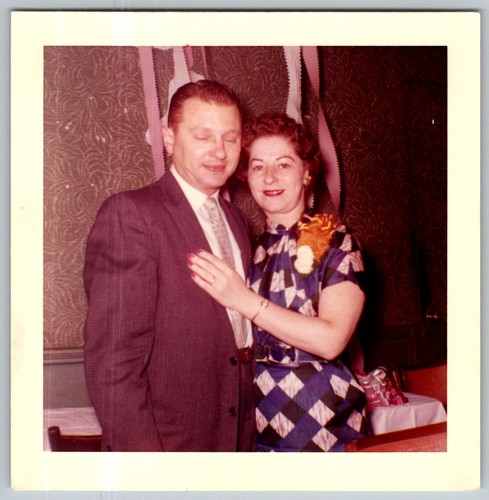
Vtg Color Snapshot Couple Man Suit Woman Geometric Dress Corsage 1960s Kodacolor

Vtg B&W Snapshot Children in Military Costumes Sailor Officer Parade 1940s

Vtg Color Snapshot Two Women Dining Polka Dot Dress Plaid Suit 1960s Kodak

Vtg Color Snapshot Girl Sitting Side Table Lamp Sofa Floral Dress Tights May 68
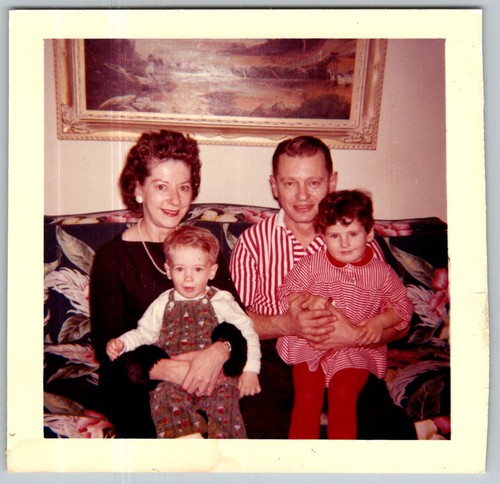
Vtg Color Snapshot Family Portrait Sofa Couch Red White Striped Shirt 1960s

Vtg Color Snapshot Cute Brother Sister Young Children Suits Apr 1968 1960s

Vtg Color Snapshot Cute Girl Pajamas Sitting Armrest Couch Chair May 1968 Photo

Vtg Color Snapshot Boy Red Robe Mid Century White Christmas Tree Home Decor 1970
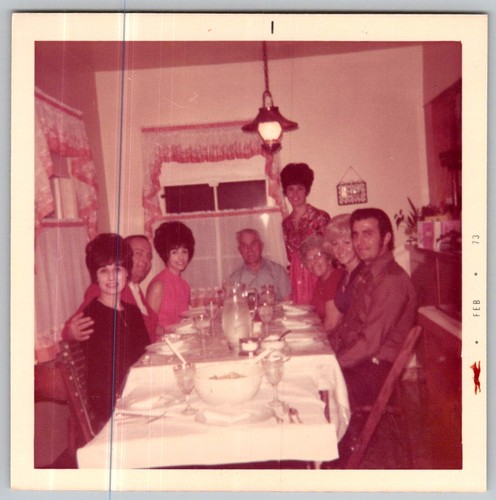
Vtg Color Snapshot Family Dinner Table Gathering Women Bouffant Hair 1973 Feb
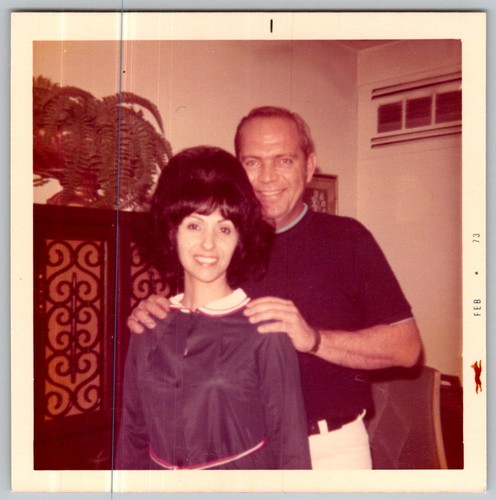
Vtg Color Snapshot Smiling Couple Woman Bouffant Hair Man Hand On Shoulder Feb

Vtg Color Snapshot Four Women Relaxing Deck Sailboat Ocean Boating 7-1974

Vtg Color Snapshot Family Group German Shepherd Dog Lawn Yard Houses Outdoor

Vtg Color Snapshot Man Standing Next To Person in Richard Nixon Mask Peace Sign

Vtg Color Snapshot Senior Man Glasses Sweater Vest Tie Dining Table Feb 1973
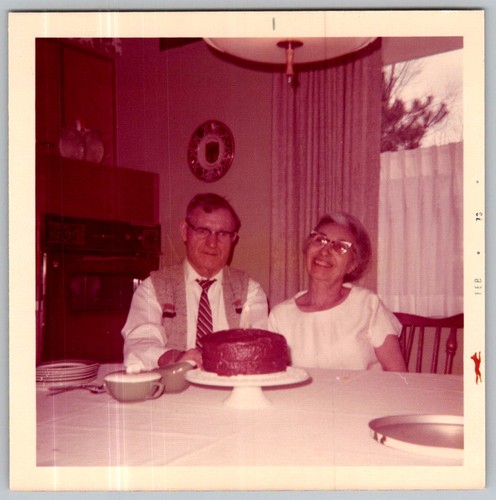
Vtg Color Snapshot Senior Elderly Couple Man Woman Birthday Chocolate Cake Feb
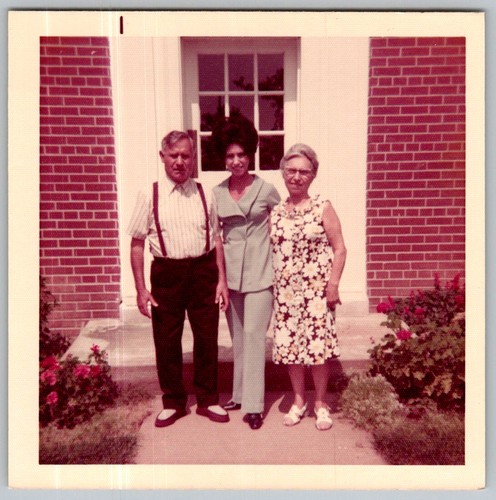
Vtg Color Snapshot Family 3 Three People Standing Brick Building Doorway Flower

Vtg Color Snapshot Family Group Portrait Outside Brick House 3277 1970s

Vtg Color Snapshot Woman Beehive Hair Boy Patterned Top Palm Trees Yard 1970s
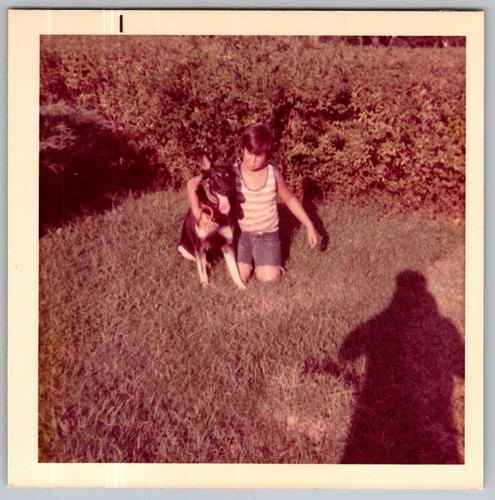
Vtg Color Snapshot Boy Kneeling German Shepherd Dog Striped Tank Top Lawn 1970s

Vtg Color Snapshot Family Man Suspenders Boy Woman Floral Dress Brick House

Vtg Color Snapshot Family Older Couple Teen Floral Dress Suspenders Brick 1970s

Vtg Color Snapshot Family Group Outdoor Park Bench Bell Bottom Shorts Drinks

Vtg Color Snapshot Couple Older Man Plaid Shirt Bouffant Hair Woman Car 1970s

Vtg Color Snapshot Two Women Old Antique Car Amusement Park Ride Rollercoaster
Snapshots are amateur photographs — candid, casual, made by ordinary people with consumer cameras. The snapshot era opens with George Eastman's 1888 Kodak No. 1 (the first true consumer roll-film camera) and goes mass-market with the $1 Brownie in 1900. Sizes follow the film format and printing technology of the day, so dating a snapshot often comes down to its dimensions and paper.
HistoryOrigin & era
The first widespread amateur prints came from the 1888 Kodak No. 1 and exploded after the 1900 Brownie; the postcard-back era (1907–1930s) gave us the Real Photo Postcard (RPPC). Mid-century brought silver-gelatin prints with deckled (scalloped) edges; from the late 1950s the standard shifted to chromogenic color, finally settling on the 4 × 6 in print that still dominates today.
IdentificationHow to spot a Snapshot
- Silver-gelatin paper (most pre-1970 black-and-white) has a slight surface sheen.
- Deckled / scalloped edges are typical of c. 1940s–1960s prints.
- "AZO" or "VELOX" stamps on the back date the paper to specific decades.
- Postcard-back prints (POST CARD divided back) are 1907 onwards.
- Color prints with white borders are largely 1950s–1970s.
Snapshot sizes
Snapshot sizes track consumer film formats. Each entry below lists the print size and the era it dominates.
| Format | Inches | Millimeters | Notes |
|---|---|---|---|
| No. 1 / 2 Brownie contact print | 2¼ × 3¼ in | 57 × 83 mm | Early Kodak roll-film, c. 1900–1930s. |
| Real Photo Postcard (RPPC) | 3½ × 5½ in | 89 × 140 mm | Postcard-back era, 1907–1930s. |
| Postcard variant | 2½ × 4¼ in | 64 × 108 mm | Less common postcard-era trim. |
| 116 / 616 contact print | 2½ × 4¼ in | 64 × 108 mm | Folding-Kodak roll film, 1900s–1950s. |
| 620 contact print | 2¼ × 3¼ in | 57 × 83 mm | Box and folding cameras, 1930s–1950s. |
| Square (127 / 620 square) | 3½ × 3½ in | 89 × 89 mm | Mid-century box cameras, 1940s–1960s. |
| Standard small print | 3½ × 5 in | 89 × 127 mm | Silver-gelatin, c. 1940s–1970s. |
| Modern enlargement | 4 × 6 in | 102 × 152 mm | Color processing, 1970s onward (still standard). |
| Studio enlargement | 5 × 7 in | 127 × 178 mm | Common formal-portrait enlargement. |
| Large enlargement | 8 × 10 in | 203 × 254 mm | Studio portraits and event photos. |
Common questions
What counts as a vernacular snapshot?
A vernacular snapshot is an amateur photograph made by an ordinary person rather than a studio — candid, informal, often unposed. The format begins with Eastman's 1888 Kodak No. 1 (the first true amateur roll-film camera) and went mass-market with the $1 Brownie in 1900. The term covers everything from Real Photo Postcards to mid-century color prints.
What is a Real Photo Postcard (RPPC)?
A Real Photo Postcard is an actual silver-gelatin photograph printed on postcard-back paper, sized about 3½ × 5½ inches. Popular from 1907 into the 1930s, RPPCs are real photographic prints (not lithographs) and can often be dated within a few years by the stamp box on the back (AZO, VELOX, KRUXO, etc.).
How do I date a snapshot?
Border, edge, and paper give the strongest clues. Postcard-backs are 1907–1930s. Deckled (scalloped) white-bordered prints are roughly 1940s–1960s. Square prints (3½ × 3½ in) come from mid-century box cameras. Color prints with white borders are 1950s–1970s; borderless 4 × 6 in color prints are late 1970s onward.
Are old snapshots worth anything?
Most family snapshots have only sentimental value, but vernacular photography has a strong collector market. Snapshots with striking compositions, unusual subjects, early color (1940s–1950s Kodachrome), occupational scenes, or historical content (war, civil rights, Americana) can range from $5 to several hundred dollars individually, and large curated lots routinely fetch multiples of that.
Have Snapshots to sell?
We buy vernacular snapshot singly or by the lot. Send a few photos and we'll have an offer back in 24–48 hours.
Get an offer →