Vernacular Snapshot
Amateur, candid photographs from the Kodak era onward — vernacular history, in shoeboxes.

Vtg Color Snapshot Fluffy White Puppy Dog Sitting in Vinyl Bean Bag Chair 1970s

Vtg Color Snapshot Young Man Glasses Long Hair Reception Hall Banquet Table

Vtg Color Snapshot Large Multi Generation Family Living Room Kodak Print 1960s
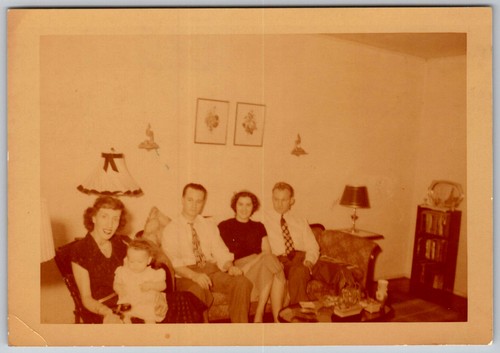
Vtg Color Snapshot Family Living Room Baby Men Women Sofa Lamps 1960s

Vtg Color Snapshot Elegant Glamour Woman White Sequin Dress Updo Hair Purse 1966

Vtg Color Snapshot Man Standing Behind Giant Snowdrift Snowbank Winter Blizzard

Vtg Color Snapshot Well Dressed Couple Man Suit Woman White Dress Outdoors 1960s

Vtg Color Snapshot River Valley Forest Hillside Mountains Landscape Nature View

Vtg Color Snapshot Garden Flowerbed Pink Flamingos Duck Lawn Ornaments Rocks

Vtg Color Snapshot Man Looking At Baby in Bassinet Fireplace Kodacolor Print

Vtg Color Snapshot Group Men Women Well Dressed Suits Plaid Fashion Luggage

Vtg Color Snapshot Club House Swimming Pool El Toro Cal California August 1976

Vtg Color Snapshot Potted Pink Cyclamen Houseplant Flowered Ceramic Planter

Vtg Color Snapshot Family First Communion Boy Candle Women Church Coats 1963

Vtg Color Snapshot Blonde Child Room Counter Interior Craft Table Display 1970s

Vtg Color Snapshot Garden Gazing Ball Ducks Flamingos Yard Lawn Kitsch 1970s

Vtg Color Snapshot Affectionate Couple Woman Lap Shirtless Man Guitar 1974

Vtg Color Snapshot Smiling Older Couple On Porch Pink Dress Wrought Iron Post

Vtg Color Snapshot Red 1973 Maroon Mgb Convertible Sports Car Driveway

Vtg Color Snapshot Little Girls Easter Sunday Hats Coats Purses Outdoors Yard

Vtg Color Snapshot Young Woman Holding Large Flower Bouquet Headband 1960s

Vtg Color Snapshot White Swan Planter Flower Bed Yard Garden Decor Light 1970s

Vtg Color Snapshot Tuxedo Cat Looking Up Brown Carpet Pet Kitty 1970s

Vtg Color Snapshot Priest Girl White Confirmation Robes Red Church Doors 1960s
Snapshots are amateur photographs — candid, casual, made by ordinary people with consumer cameras. The snapshot era opens with George Eastman's 1888 Kodak No. 1 (the first true consumer roll-film camera) and goes mass-market with the $1 Brownie in 1900. Sizes follow the film format and printing technology of the day, so dating a snapshot often comes down to its dimensions and paper.
HistoryOrigin & era
The first widespread amateur prints came from the 1888 Kodak No. 1 and exploded after the 1900 Brownie; the postcard-back era (1907–1930s) gave us the Real Photo Postcard (RPPC). Mid-century brought silver-gelatin prints with deckled (scalloped) edges; from the late 1950s the standard shifted to chromogenic color, finally settling on the 4 × 6 in print that still dominates today.
IdentificationHow to spot a Snapshot
- Silver-gelatin paper (most pre-1970 black-and-white) has a slight surface sheen.
- Deckled / scalloped edges are typical of c. 1940s–1960s prints.
- "AZO" or "VELOX" stamps on the back date the paper to specific decades.
- Postcard-back prints (POST CARD divided back) are 1907 onwards.
- Color prints with white borders are largely 1950s–1970s.
Snapshot sizes
Snapshot sizes track consumer film formats. Each entry below lists the print size and the era it dominates.
| Format | Inches | Millimeters | Notes |
|---|---|---|---|
| No. 1 / 2 Brownie contact print | 2¼ × 3¼ in | 57 × 83 mm | Early Kodak roll-film, c. 1900–1930s. |
| Real Photo Postcard (RPPC) | 3½ × 5½ in | 89 × 140 mm | Postcard-back era, 1907–1930s. |
| Postcard variant | 2½ × 4¼ in | 64 × 108 mm | Less common postcard-era trim. |
| 116 / 616 contact print | 2½ × 4¼ in | 64 × 108 mm | Folding-Kodak roll film, 1900s–1950s. |
| 620 contact print | 2¼ × 3¼ in | 57 × 83 mm | Box and folding cameras, 1930s–1950s. |
| Square (127 / 620 square) | 3½ × 3½ in | 89 × 89 mm | Mid-century box cameras, 1940s–1960s. |
| Standard small print | 3½ × 5 in | 89 × 127 mm | Silver-gelatin, c. 1940s–1970s. |
| Modern enlargement | 4 × 6 in | 102 × 152 mm | Color processing, 1970s onward (still standard). |
| Studio enlargement | 5 × 7 in | 127 × 178 mm | Common formal-portrait enlargement. |
| Large enlargement | 8 × 10 in | 203 × 254 mm | Studio portraits and event photos. |
Common questions
What counts as a vernacular snapshot?
A vernacular snapshot is an amateur photograph made by an ordinary person rather than a studio — candid, informal, often unposed. The format begins with Eastman's 1888 Kodak No. 1 (the first true amateur roll-film camera) and went mass-market with the $1 Brownie in 1900. The term covers everything from Real Photo Postcards to mid-century color prints.
What is a Real Photo Postcard (RPPC)?
A Real Photo Postcard is an actual silver-gelatin photograph printed on postcard-back paper, sized about 3½ × 5½ inches. Popular from 1907 into the 1930s, RPPCs are real photographic prints (not lithographs) and can often be dated within a few years by the stamp box on the back (AZO, VELOX, KRUXO, etc.).
How do I date a snapshot?
Border, edge, and paper give the strongest clues. Postcard-backs are 1907–1930s. Deckled (scalloped) white-bordered prints are roughly 1940s–1960s. Square prints (3½ × 3½ in) come from mid-century box cameras. Color prints with white borders are 1950s–1970s; borderless 4 × 6 in color prints are late 1970s onward.
Are old snapshots worth anything?
Most family snapshots have only sentimental value, but vernacular photography has a strong collector market. Snapshots with striking compositions, unusual subjects, early color (1940s–1950s Kodachrome), occupational scenes, or historical content (war, civil rights, Americana) can range from $5 to several hundred dollars individually, and large curated lots routinely fetch multiples of that.
Have Snapshots to sell?
We buy vernacular snapshot singly or by the lot. Send a few photos and we'll have an offer back in 24–48 hours.
Get an offer →