
Vernacular Snapshot
Amateur, candid photographs from the Kodak era onward — vernacular history, in shoeboxes.
Vtg Color Snapshot Elegant Woman Sitting In Chair With Potted Houseplant 1960s

Vtg Color Snapshot Happy Couple At The Wedding Bell Mecca Of Romance Sign 1960s

Vtg Color Snapshot Man On Large Masted Sailboat Yacht In Harbor Nautical 1960s

Vtg Color Snapshot Fluffy Black Chow Chow Dog Sitting Outdoors Tongue Out 1960s

Vtg Color Snapshot Soldier US Army Uniform Corporal Rank Barracks Saxman 1960s
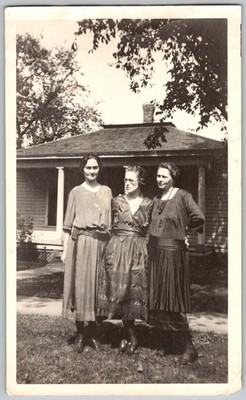
Vtg Color Snapshot Three Women In Stylish Drop Waist Dresses By House 1960s

Vtg Color Snapshot Couple Ed & Mrs Witte Ocean Beach Pier Boardwalk Sea 1960s

Vtg Color Snapshot Woman In Long Coat & Hat In Snow By Large Building 1960s

Vtg Color Snapshot Three Women In White Dresses Wading In Forest Creek 1960s

Vtg Color Snapshot Man In Striped Swimsuit Standing On Beach With Pier 1960s

Vtg Color Snapshot Couple Woman Floral Print Dress Man Tie Army Air Base 1960s

Vtg Color Snapshot Well Dressed Couple In Coats Hats By Classical Columns 1960s

Vtg Color Snapshot Man Soldier In Foxhole With Bazooka Weapon Field 1960s

Vtg Color Snapshot Elegant Woman Curly Hair Lace Collar Studio Portrait 1960s

Vtg Color Snapshot Man In Tie & Hat With Industrial Engine In Rural Hills 1960s

Vtg Color Snapshot Woman Bouffant Hair White Cardigan Reading Papers 1960s

Vtg Color Snapshot Man Smiling On Gallows Scaffold Noose Prop Stockade 1960s

Vtg Color Snapshot Man At Chrysler Exhibit Mechanical Man Giant Robot 1960s

Vtg Color Snapshot Woman In Hat And Long Coat On Rocky Path With Sheep 1960s

Vtg Color Snapshot Man Relaxing Reading Book On Sofa Pillows Interior 1960s

Vtg Color Snapshot Group Women Children White Dresses Temple Building 1960s

Vtg Color Snapshot Group Of Men In Suits And Hats At Construction Site 1960s

Vtg Color Snapshot Smiling Couple Hugging By Rustic Barn Striped Dress 1960s

Vtg Color Snapshot Man In Cowboy Hat Riding Horse By Rustic Log Cabin 1960s
Snapshots are amateur photographs — candid, casual, made by ordinary people with consumer cameras. The snapshot era opens with George Eastman's 1888 Kodak No. 1 (the first true consumer roll-film camera) and goes mass-market with the $1 Brownie in 1900. Sizes follow the film format and printing technology of the day, so dating a snapshot often comes down to its dimensions and paper.
HistoryOrigin & era
The first widespread amateur prints came from the 1888 Kodak No. 1 and exploded after the 1900 Brownie; the postcard-back era (1907–1930s) gave us the Real Photo Postcard (RPPC). Mid-century brought silver-gelatin prints with deckled (scalloped) edges; from the late 1950s the standard shifted to chromogenic color, finally settling on the 4 × 6 in print that still dominates today.
IdentificationHow to spot a Snapshot
- Silver-gelatin paper (most pre-1970 black-and-white) has a slight surface sheen.
- Deckled / scalloped edges are typical of c. 1940s–1960s prints.
- "AZO" or "VELOX" stamps on the back date the paper to specific decades.
- Postcard-back prints (POST CARD divided back) are 1907 onwards.
- Color prints with white borders are largely 1950s–1970s.
Snapshot sizes
Snapshot sizes track consumer film formats. Each entry below lists the print size and the era it dominates.
| Format | Inches | Millimeters | Notes |
|---|---|---|---|
| No. 1 / 2 Brownie contact print | 2¼ × 3¼ in | 57 × 83 mm | Early Kodak roll-film, c. 1900–1930s. |
| Real Photo Postcard (RPPC) | 3½ × 5½ in | 89 × 140 mm | Postcard-back era, 1907–1930s. |
| Postcard variant | 2½ × 4¼ in | 64 × 108 mm | Less common postcard-era trim. |
| 116 / 616 contact print | 2½ × 4¼ in | 64 × 108 mm | Folding-Kodak roll film, 1900s–1950s. |
| 620 contact print | 2¼ × 3¼ in | 57 × 83 mm | Box and folding cameras, 1930s–1950s. |
| Square (127 / 620 square) | 3½ × 3½ in | 89 × 89 mm | Mid-century box cameras, 1940s–1960s. |
| Standard small print | 3½ × 5 in | 89 × 127 mm | Silver-gelatin, c. 1940s–1970s. |
| Modern enlargement | 4 × 6 in | 102 × 152 mm | Color processing, 1970s onward (still standard). |
| Studio enlargement | 5 × 7 in | 127 × 178 mm | Common formal-portrait enlargement. |
| Large enlargement | 8 × 10 in | 203 × 254 mm | Studio portraits and event photos. |
Common questions
What counts as a vernacular snapshot?
A vernacular snapshot is an amateur photograph made by an ordinary person rather than a studio — candid, informal, often unposed. The format begins with Eastman's 1888 Kodak No. 1 (the first true amateur roll-film camera) and went mass-market with the $1 Brownie in 1900. The term covers everything from Real Photo Postcards to mid-century color prints.
What is a Real Photo Postcard (RPPC)?
A Real Photo Postcard is an actual silver-gelatin photograph printed on postcard-back paper, sized about 3½ × 5½ inches. Popular from 1907 into the 1930s, RPPCs are real photographic prints (not lithographs) and can often be dated within a few years by the stamp box on the back (AZO, VELOX, KRUXO, etc.).
How do I date a snapshot?
Border, edge, and paper give the strongest clues. Postcard-backs are 1907–1930s. Deckled (scalloped) white-bordered prints are roughly 1940s–1960s. Square prints (3½ × 3½ in) come from mid-century box cameras. Color prints with white borders are 1950s–1970s; borderless 4 × 6 in color prints are late 1970s onward.
Are old snapshots worth anything?
Most family snapshots have only sentimental value, but vernacular photography has a strong collector market. Snapshots with striking compositions, unusual subjects, early color (1940s–1950s Kodachrome), occupational scenes, or historical content (war, civil rights, Americana) can range from $5 to several hundred dollars individually, and large curated lots routinely fetch multiples of that.
Have Snapshots to sell?
We buy vernacular snapshot singly or by the lot. Send a few photos and we'll have an offer back in 24–48 hours.
Get an offer →