Carte de Visite
Albumen-print portraits on small card mounts — the calling-card photo of the Civil War era.

Antique CDV 1870s West End Photo CO Woman Book Dress London England

Antique CDV A Eason & CO Baby Girl Lace Pinafore Dress Kingsland London

Antique CDV 1870s Henry Spink Young Woman Choker Necklace Brighton UK

Antique CDV Mrs Robinson Young Woman Portrait Ashton Under Lyne UK

Antique CDV 1870s M Robinson CO Bearded Man Portrait Ashton-Under-Lyne UK

Antique CDV D.F. Mcrae Woman High Ruffle Collar Cheapside London UK

Antique CDV 1880 W.G. Helsby Jun Young Girl Standing On Chair Denbigh UK

Antique CDV West End Photographic CO Fred James Handsome Man Oxford St London

Antique CDV 1860s J B Knott Miss Mckenzie Crinoline Dress Edinburgh UK

Antique CDV C J Thompson Portrait Woman Lace Dress Jewelry Norwich UK

Antique CDV Rowland Taylor Young Man Mustache Suit Tie London UK

Antique CDV 1880s I. T. Dando & Sons Man Mustache Suit Newport Monmouth UK

Antique CDV W Bath Man Sideburns Cane Suit Farringdon St London UK

Antique CDV 1870s J Abbot Young Woman Book Dundee Scotland Portrait

Antique CDV 1870s A Mencke Two Young Children Girls Coat Dress Hamburg

Antique CDV A.R. Macwilliams Young Man Suit Glasgow Scotland Portrait

Antique CDV 1870s Ferret Young Girl Buttoned Coat Dress Nice France
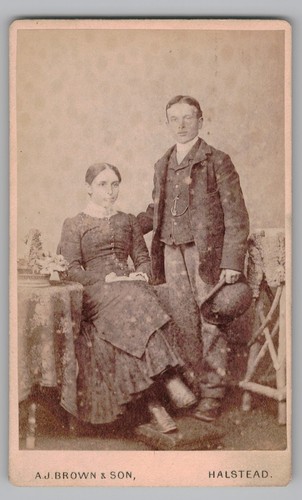
Antique CDV 1880s A.J. Brown & Son Young Couple Fashion Halstead Essex UK

Antique CDV Fred Downer Toddler Child Hat Coat Boots Watford UK

Antique CDV 1880s J.H. Bayley Young Man Three Piece Suit Ripon Yorkshire

Antique CDV C. Watson Young Man Frock Coat Suit Ripon Yorkshire UK

Antique CDV 1880s E Williams Baby in White Gown Hawkhurst Kent UK

Antique CDV T & J Holroyd Man Sitting With Bowler Hat Cane Harrogate UK

Antique CDV 1890 Mrs Haymes Young Couple Tweed Suit Kingsbridge Devon UK
The carte de visite (CDV) is a small albumen photograph mounted on a stiff card the size of a calling card. First proposed by Louis Dodero in 1851 and patented in France by André Disdéri in 1854, CDVs became a worldwide craze after Disdéri photographed Emperor Napoleon III in 1859 — and stayed in production into the 1920s, collected and pasted into family albums by the millions.
HistoryOrigin & era
CDVs are produced from a glass-plate negative printed onto thin albumen paper, then trimmed and pasted to a card mount. Studios printed them by the dozen; the same sitter could order several copies of the same exposure to hand out. The format was largely displaced by the larger cabinet card from the 1880s onward, though CDV-sized prints continued to be made by smaller studios and itinerant photographers into the 1920s.
IdentificationHow to spot a CDV
- Card mount roughly 2½ × 4 inches.
- Albumen print — slight surface gloss, often warm brown or sepia tones.
- Studio imprint usually on the back (photographer + city).
- Square-cornered mounts are earlier (c. 1860s); rounded corners and decorated backs come in later.
- Tax revenue stamps on the back date it to 1864–1866 (U.S. Civil War tax).
CDV sizes
CDVs are largely standardized — the mount size barely varies — but the photo on the mount and the mount stock evolved over time.
| Format | Inches | Millimeters | Notes |
|---|---|---|---|
| Standard CDV mount | 2½ × 4 in | 64 × 100 mm | Universal mount size from the 1860s on. |
| Albumen print on mount | ≈ 2⅛ × 3½ in | ≈ 54 × 89 mm | Photo trimmed to fit the mount with a small border. |
| Victoria (mini-CDV) | 3¼ × 5 in | 83 × 127 mm | Brief 1870s variant — slightly larger than standard. |
Common questions
What is a CDV photograph?
A carte de visite (CDV) is a small albumen photograph mounted on a card the size of a calling card — roughly 2½ × 4 inches. The format was first proposed by Louis Dodero in 1851 and patented in France by André Disdéri in 1854. CDVs were the dominant portrait format from the early 1860s through the 1870s and continued to be made into the 1920s.
How can I tell if a CDV is from the Civil War era?
A revenue tax stamp on the back dates a CDV to between August 1864 and August 1866 — the only window when the U.S. taxed photographs. Square corners, plain mounts, and two-line photographer imprints also point to the 1860s; rounded corners and elaborate decorated backs are 1870s and later.
How much is an antique CDV worth?
Common 1870s studio portraits typically run $5–$25, while Civil War soldier images, identified subjects, occupational portraits, and outdoor scenes can run from $75 into the thousands. Condition, identification, and historical interest of the sitter drive value far more than age alone.
Are CDVs and cabinet cards the same thing?
No — they share the albumen process but cabinet cards are larger (about 4¼ × 6½ inches on heavier card stock) and came into vogue in the late 1860s. CDVs and cabinet cards coexisted from roughly 1866 into the 1890s before cabinets took over the standard portrait market.
Have CDVs to sell?
We buy carte de visite singly or by the lot. Send a few photos and we'll have an offer back in 24–48 hours.
Get an offer →